Online Safety

Online Safety Alert 
"The Com" Targeting Children & Youth

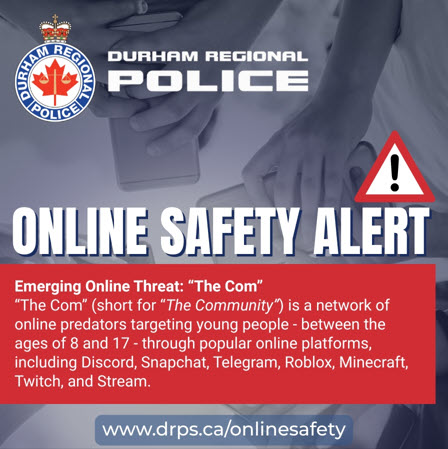
The Durham Regional Police Service (DRPS) is alerting parents, caregivers, and community members to an emerging online threat involving coordinated groups known as “The Com” (short for "The Community").

These groups target children and youth aged 8 to 17 across popular online platforms, including
Discord, Telegram, Snapchat, Roblox, Minecraft, Twitch, and Steam. 

DRPS has recently responded to a number of incidents in the community that are believed to be linked to this online predatory group.

Watch this video for tips on how to keep children safe online

Online Safety: "The Com"

What Is Happening?

“The Com” is a network of online predators who use grooming, manipulation, coercion, and intimidation to exploit young people, which can lead to violent and/or criminal behaviour. 

Offenders often build trust, create secrecy through fear or shame, and pressure victims into harmful or unsafe activities. Images or content may be shared within these networks to increase humiliation and control. 

Watch for clusters of the following behaviours: 

  • Build trust through friendship or romantic attention
  • Manipulate youth using fear, guilt, or intimidation
  • Coerce victims into harmful or unsafe activities, including: 
    • Creating or sharing inappropriate and exploitative images or videos
    • Engaging in self-harm or harm toward others or animals
    • Displaying concerning usernames, symbols, or messages
  • Force compliance through threats such as exposing private information, doxing, or swatting. 

Parents and caregivers are encouraged to watch for patterns or clusters of the following behaviours: 

  • Use of encrypted apps (e.g., Discord, Telegram) without parental knowledge
  • Withdrawal, secrecy, mood changes, or declining academic performance
  • Increased or secretive use of phones or electronic devices
  • Interest in extreme or harmful online ideologies
  • New online contacts your child seems unusually attached to—or afraid of 

While individual signs may not indicate a concern, multiple indicators together may warrant attention. 

Criminal activities reported include:

  • Grooming and coercion
  • Extortion and sextortion
  • Swatting and hoax emergency threats
  • Online attacks, including doxing
  • Cybercrimes like cryptocurrency theft and ransomware
  • Threats of real world violence

Offenders may pressure kids into creating or sharing inappropriate images, engaging in self harm or harm toward others or animals, or using disturbing usernames or symbols.

A major concern is that these groups are coercing children to participate in crimes—such as hoax 9 1 1 calls, online attacks, or sharing harmful content—often without realizing the seriousness of what they’re being manipulated into.

A child who thinks they’re helping a “friend” can become involved in a criminal swatting incident within minutes.

Have open conversations about online safety: 
Talk to your child about the risks of sharing personal information or images online. Ask direct, non-judgmental questions about the platforms they use and the individuals they interact with.

Review and monitor online activity:
Ensure you have access to your child’s online platforms and regularly review their activity. Pay close attention to platforms with chat or group features.

Report concerns to DRPS: 
Please remain vigilant. If you notice any concerning online activity or individuals on online platforms that may pose a safety risk, report it to DRPS. Even small details can be critical in protecting other children from being targeted.

  • DRPS non-emergency line: 1-888-579-1520
  • In an emergency: Call 9-1-1 immediately
Report Concerns to DRPS

Please remain vigilant. If you notice any concerning online activity or individuals on online platforms that may pose a safety risk, report it to DRPS. 

Do not delete anything.
Save screenshots, messages, usernames, or links if possible. Do not confront the offender.

  • DRPS non-emergency line: 1‑888‑579‑1520
  • In an emergency: Call 9‑1‑1 immediately

Even small details can be critical in protecting other children from being targeted. 

FAQ for Parents: Understanding and Responding to “The Com” Online Threat

FAQs

  • “The Com” – short for “The Community” – is an online network of bad actors who target, groom, and exploit children and youth. They operate across gaming platforms, messaging apps, and social media, and use tactics like manipulation, intimidation, and secrecy to influence young people.

  • Children and youth between 8 and 17 years old are most frequently targeted. Offenders look for young people who are active on gaming platforms, social media, or apps with private messaging features.

  • “The Com” operates across widely used platforms, including:

    • Discord
    • Telegram
    • Roblox
    • Minecraft
    • Twitch
    • Steam
    • Any platform with messaging, chat rooms, or voice chat can be exploited.

Criminal activities reported include:

  • Grooming and coercion of minors
  • Swatting and hoax emergency threats
  • Extortion and sextortion, including coercing minors to share nude images
  • Cyber crimes, such as cryptocurrency theft and ransomware activity
  • Real-world violence or threats of violence

Law enforcement has also identified specific subsets:

  • “Hacker Com” – focused on cybercrime
  • “IRL Com” – involved in in‑person violence.

They may:

  • Pretend to be peers or friends
  • Offer gifts, status, or attention
  • Use secrecy, shame, or fear to control victims
  • Threaten to share images or information
  • Build trust before introducing harmful requests

Watch for clusters of unusual behaviours, such as:

  • Using encrypted apps without your knowledge
  • Withdrawal, secrecy, mood swings, or declining grades
  • Increased late‑night or unsupervised online time
  • New online “friends” your child seems overly attached to or afraid of
  • Anonymous gifts, digital currency, or unexplained purchases
  • Sudden interest in violent or extreme online content
  • Unexplained injuries or covering skin

One sign alone may not be cause for alarm—but multiple signs together may indicate risk.

Yes. Parents should:

  • Have access to their child’s accounts
  • Review friend lists, chat histories, and recent activity
  • Understand the platforms, games, and apps their child uses
  • Be especially mindful of apps with private messaging or voice chat
    Monitoring should be paired with trust-building, not secrecy or fear.

If you see suspicious activity or believe your child may be interacting with harmful individuals:

  1. Do not confront the suspect yourself.
  2. Capture screenshots or save evidence, if safe to do so.
  3. Contact Durham Regional Police Service immediately.
    Even small details may help prevent harm to another child.

  • Stay calm and reassure them they are not in trouble
  • Let them know you’re proud they came forward
  • Do not delete conversation history, images, or messages—they may be important for police
  • Contact DRPS for support and guidance

  • Stay informed about the platforms your child uses
  • Have clear expectations about online behaviour
  • Use parental controls where appropriate
  • Place computers and devices in common areas when possible
  • Encourage healthy offline activities and balance

If you notice any concerning online activity or individuals on online platforms that may pose a safety risk, report it to DRPS. 

Do not delete anything.
Save screenshots, messages, usernames, or links if possible. Do not confront the offender.

  • DRPS non-emergency line: 1‑888‑579‑1520
  • In an emergency: Call 9‑1‑1 immediately

Even small details can be critical in protecting other children from being targeted.